
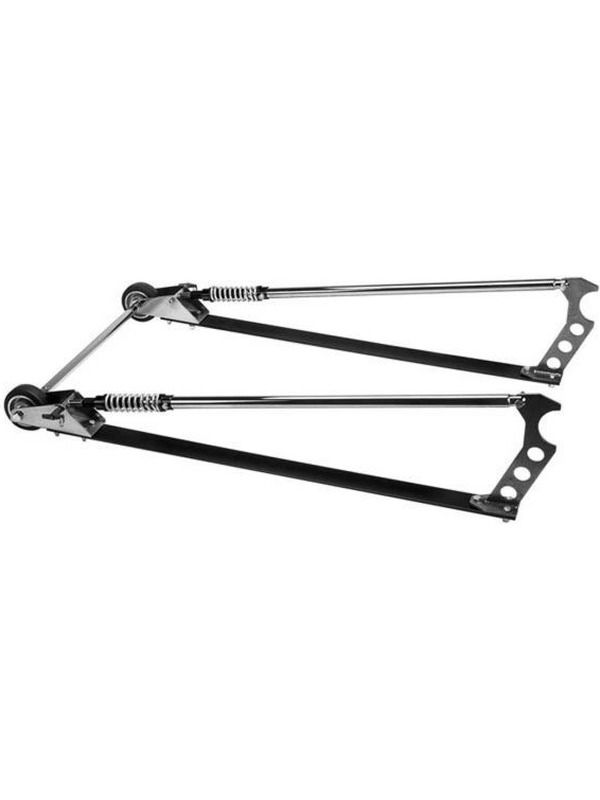

Competition Engineering Wheelie Bar Kit Weld-On Steel/Aluminium 44" Length C2036


(Prior to Dispatch)

Type in your postcode or suburb to get an estimate on postage cost.
Competition Engineering Wheelie Bar Kit Weld-On Steel/Aluminium 44" Length
Notes: Wheelie Bar Kit Weld-On Steel/Aluminium Chrome/Black Anodized Kit
Professional Wheel-E-Bars , Chrome plated with black anodized Aluminium components Designed to withstand the abuse of drag racing, the Competition Engineering Professional Wheel-E-Bar Series is the choice of more racers than any other design when quality and premium materials count. Each bar features lower spring adjusters made from 7075-T6 Aluminium to allow for ease in preload adjustment. The lower struts are made from high strength 6061-T6 Aluminium, enabling them to handle the forces applied to them without fatiguing. Each kit includes all the required fasteners as well as quick release pins to allow access to the rear end housing for jacking. 44 overall length, 22-11/16 center to center mounting bracket distance. Fits 3 Axle Tube Wheelstands may look spectacular but they can actually hurt performance. Although some front end lift is beneficial to weight transfer, excessive lift can hurt. When a car wheelstands upon initial launch, it uses up power that could propel the vehicle forward. This results in slower ET's. As tire technology and horsepower levels progressed over the years, racers experimented with different ways to combat the wheelstanding problem. Most of the original designs consisted of merely bars or leaf springs that were welded directly to the rear end housing, hoping that they would prevent the front of the car from rising too high. One of the major problems with these early designs is that they caused the rear tires to unload resulting in a loss of traction. Competition Engineering recognized this problem long ago and developed a series of Wheel-E-Bars designed to limit and control big wheelstands without unloading the rear tires. We accomplish this by utilizing an axle housing mounted bracket that allows the Wheel-E-Bar to react instantaneously with rear housing movement. As the rear housing rotates, the natural rubber wheels come in contact with the track. The shock of this contact is absorbed by both the lower Aluminium struts and the coil spring upper struts which keep the tires from unloading. As the housing continues to rotate more and the front end begins to lift, the coil springs on the upper struts start to compress. The more that the springs are compressed, the more force they exert converts the rotational energy into forward motion, resulting in quicker ET's.